The code of nature
Our agency is named after a number. Behind that number sits one of the most beautiful stories in mathematics: a sequence you start seeing everywhere once you know where to look. This is an ode to Fibonacci, to the golden ratio, and to the idea that beauty and function can be the same thing.
Start with two. Two rabbits, two numbers, two simple rules. What follows describes the spirals in a sunflower, the shell of a nautilus and the arms of a galaxy millions of light years across.
It links a counting puzzle from the thirteenth century to the way a pinecone grows. And it ends at a single number: 0.618. That is where MS618 comes from.
A merchant's son teaches Europe to count
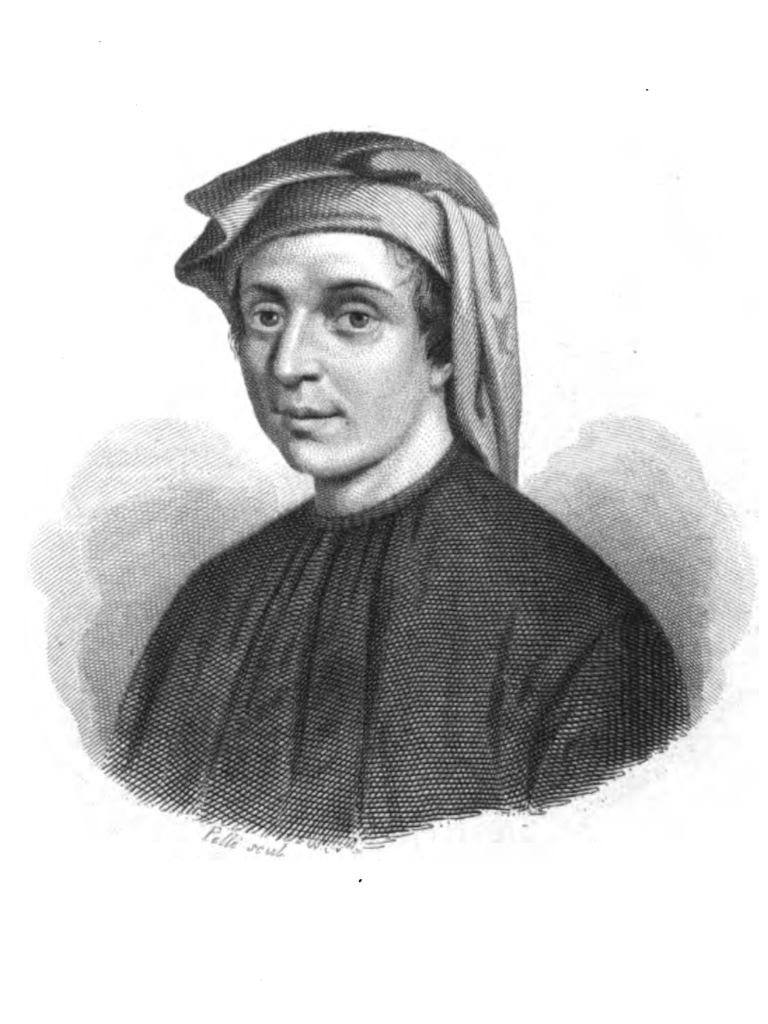
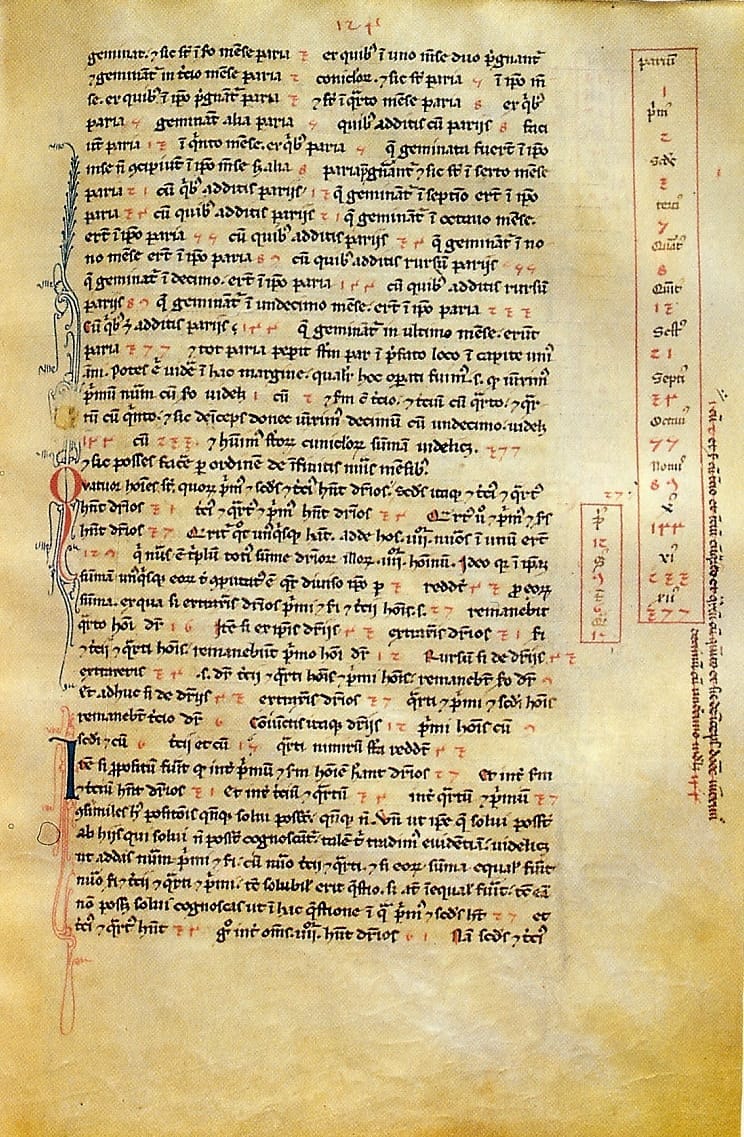
Leonardo of Pisa grew up among the traders of the Mediterranean. On his travels through North Africa he learned the Hindu-Arabic numeral system: the digits 0 to 9 we still use today. Back in Italy he wrote Liber Abaci, the book that brought those numerals to the West and slowly pushed out the clumsy Roman numerals.
Only centuries later did he earn the nickname Fibonacci, a contraction of filius Bonacci, son of Bonacci.
That same book held an innocent looking puzzle about a pair of rabbits breeding every month. How many pairs after a year? The answer was a sequence that Indian mathematicians like Pingala and Hemachandra had described centuries earlier, but which has carried the name of Fibonacci ever since.
Each number is the sum of the two before it
0 · 1 · 1 · 2 · 3 · 5 · 8 · 13 · 21 · 34 · 55 · 89 · 144 …
The rule is almost too simple. Start with 0 and 1. Add them and you get 1. Add the last two again: 1 and 1 is 2. Then 1 and 2 is 3. Next 2 and 3 is 5, 3 and 5 is 8, 5 and 8 is 13. You can go on forever. Out of that one rule rolls a sequence that, strangely enough, shows up all over the living world.
Where the sequence is heading
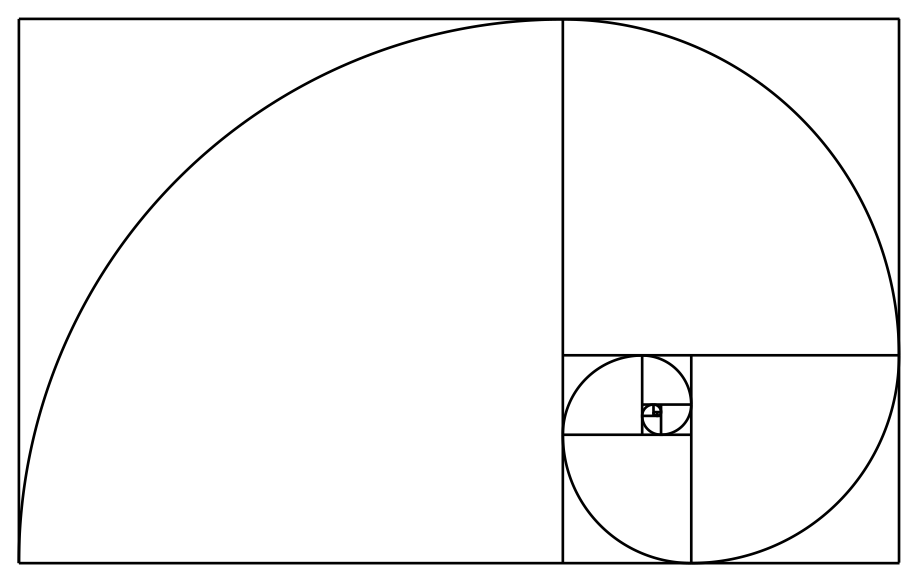
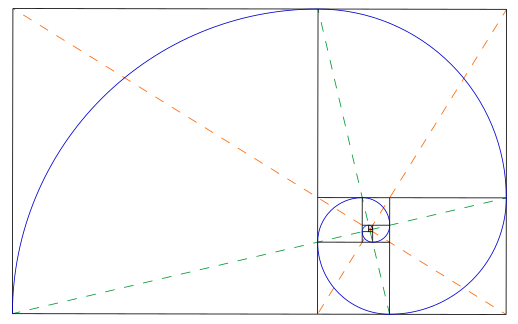
Now the beautiful part. Divide each number in the sequence by the one before it and watch. 8 divided by 5 is 1.6. 13 divided by 8 is 1.625. 21 divided by 13 is 1.615. The result dances around one fixed number and creeps ever closer to it: 1.6180339887, and on it goes, forever, never repeating.
This is phi, written as the Greek letter φ, the golden ratio. And its mirror, 1 divided by 1.618, is 0.618. That is where the 618 in our name comes from.
The definition is elegant. Two parts are in golden proportion when the larger part relates to the whole as the smaller part relates to the larger. It is the ratio that, to many people, simply looks in balance.
Nature by Numbers
The animation below, made by Cristóbal Vila, brings it together: from the sequence to the spiral, to the sunflower, to the wing of a dragonfly. Three minutes, no words needed.
Why a plant can count without counting
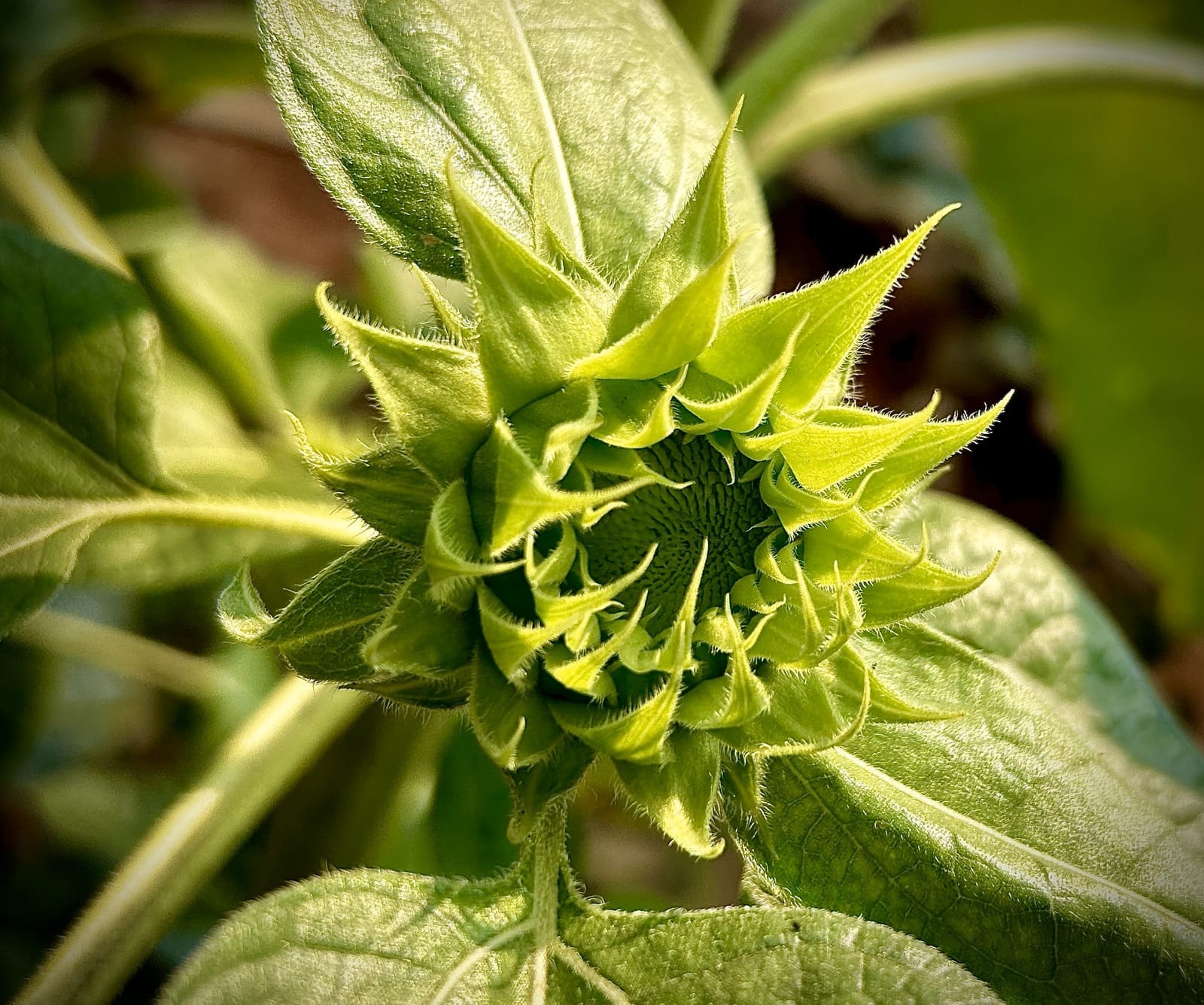
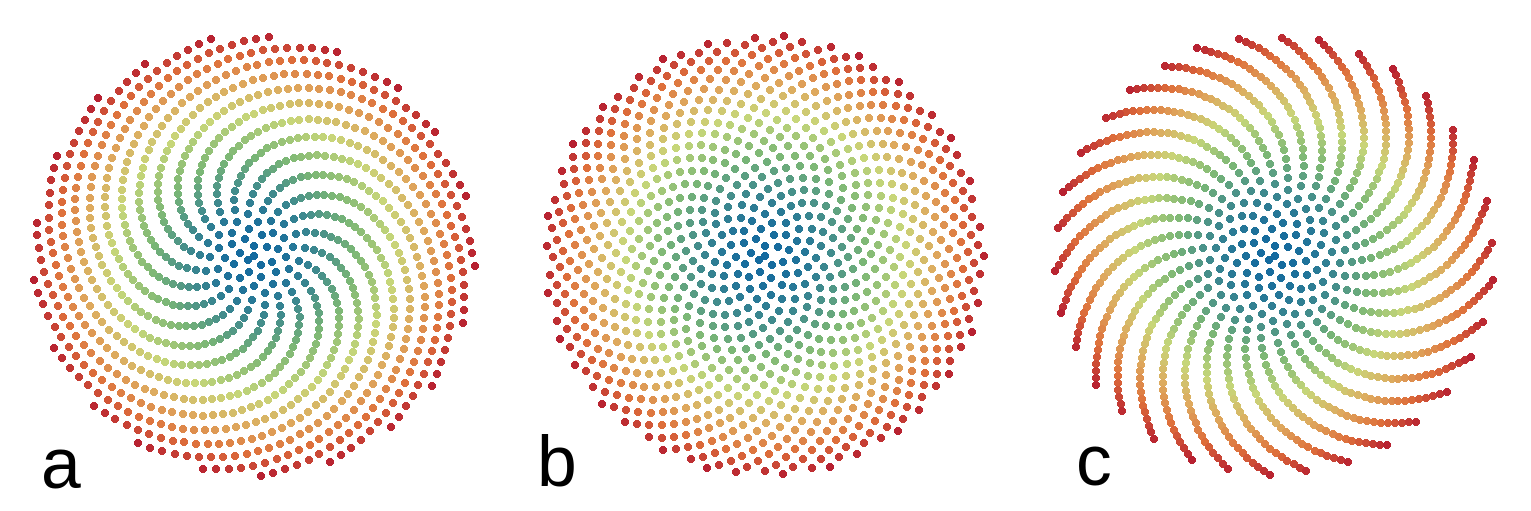
A plant growing leaf after leaf has a problem. Place each new leaf right above the last and the top leaf robs the bottom one of light. The solution is to turn each leaf a fixed angle from the one before. And the very best angle, the one that makes leaves overlap as little as possible, is about 137.5 degrees: the golden angle, derived straight from φ.
That is why the heart of a sunflower holds two sets of spirals, one clockwise, the other against it. Count them, and they are almost always two consecutive Fibonacci numbers: 34 and 55, or 55 and 89. Not because the flower calculates, but because this is the most economical way to pack seeds.
The most impossible number
Why does a plant pick exactly this angle? Because φ is, in a sense, the most irrational number there is: it resists being approximated by fractions. And that is precisely what makes it the most efficient way to leave nothing overlapping. Numberphile explains it with a sublime simulation.
The same spiral, at every scale
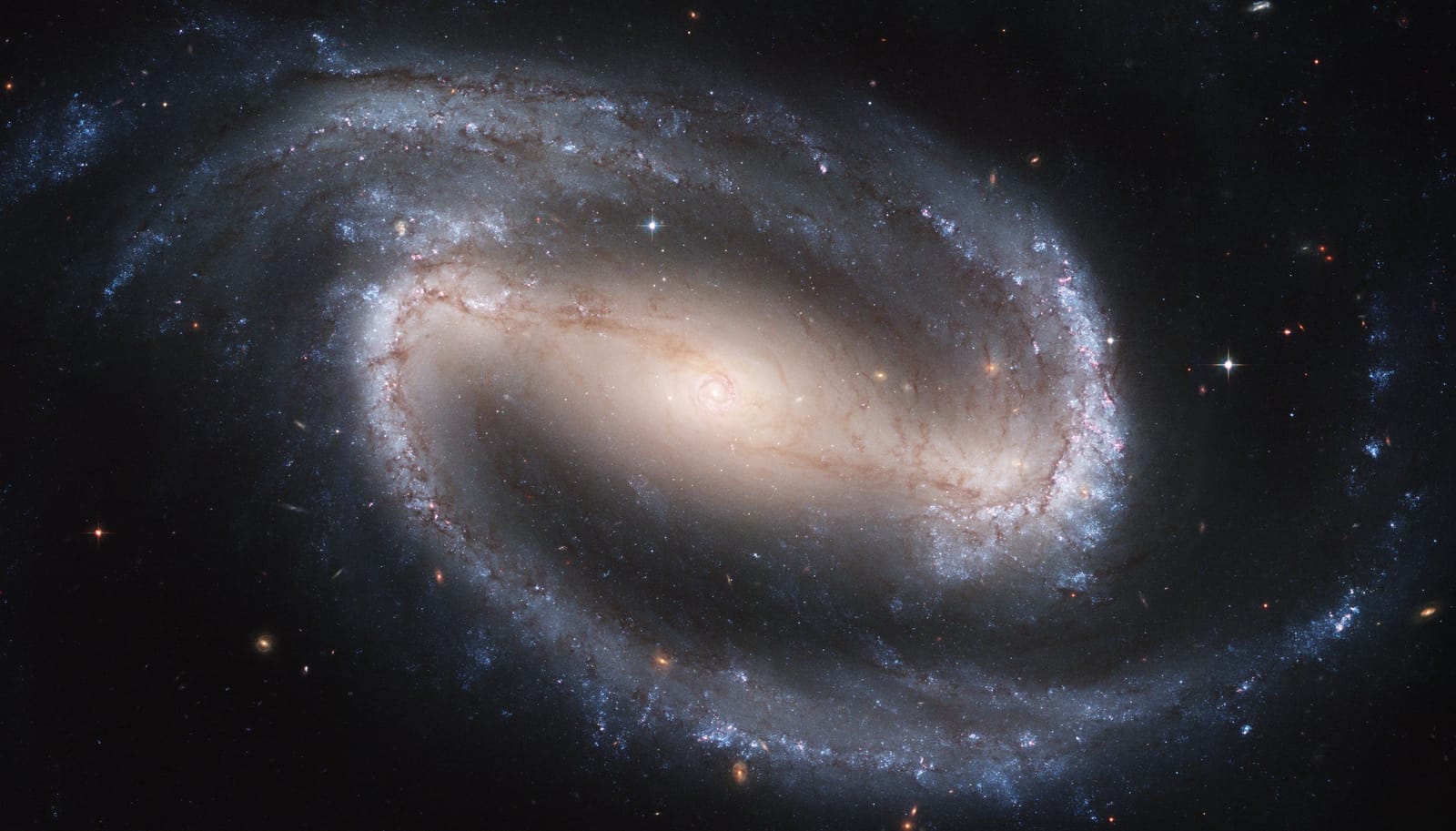
Once you see the spiral, you see it everywhere. To be honest: not every spiral in nature is exactly the golden spiral. Many are logarithmic spirals, relatives of it, but not identical. What they share is the principle: growing by repeating the same shape at every scale.
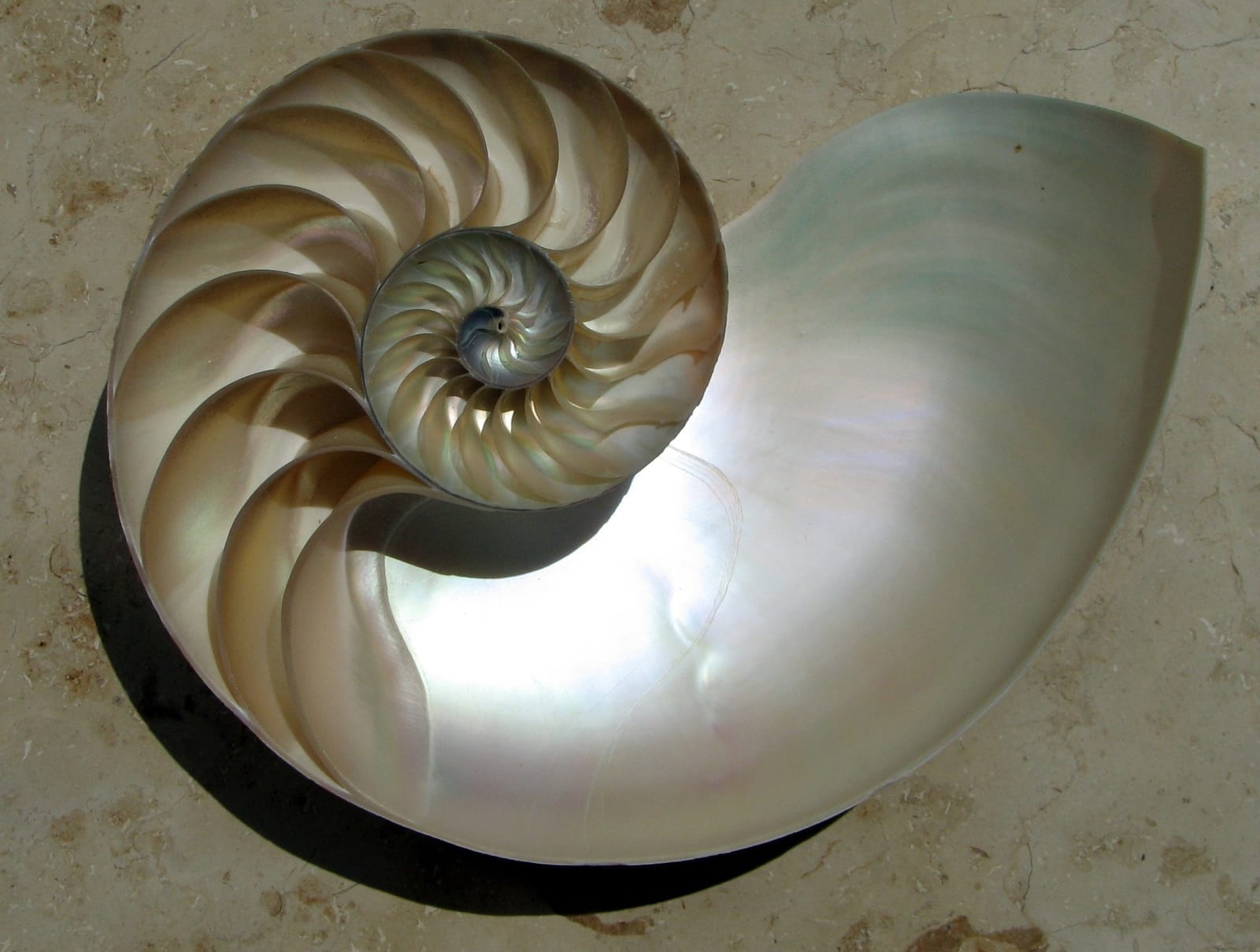
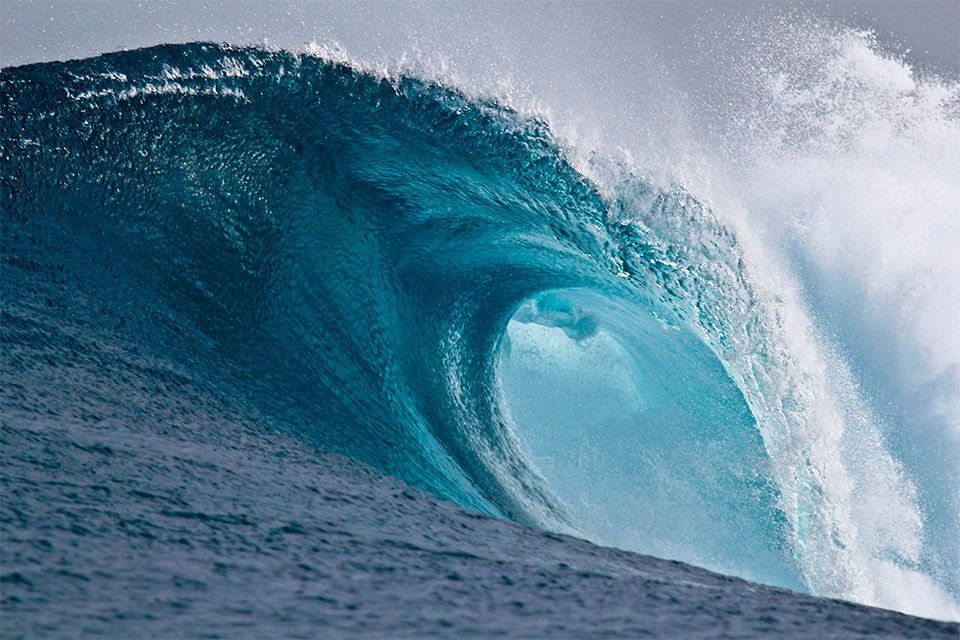
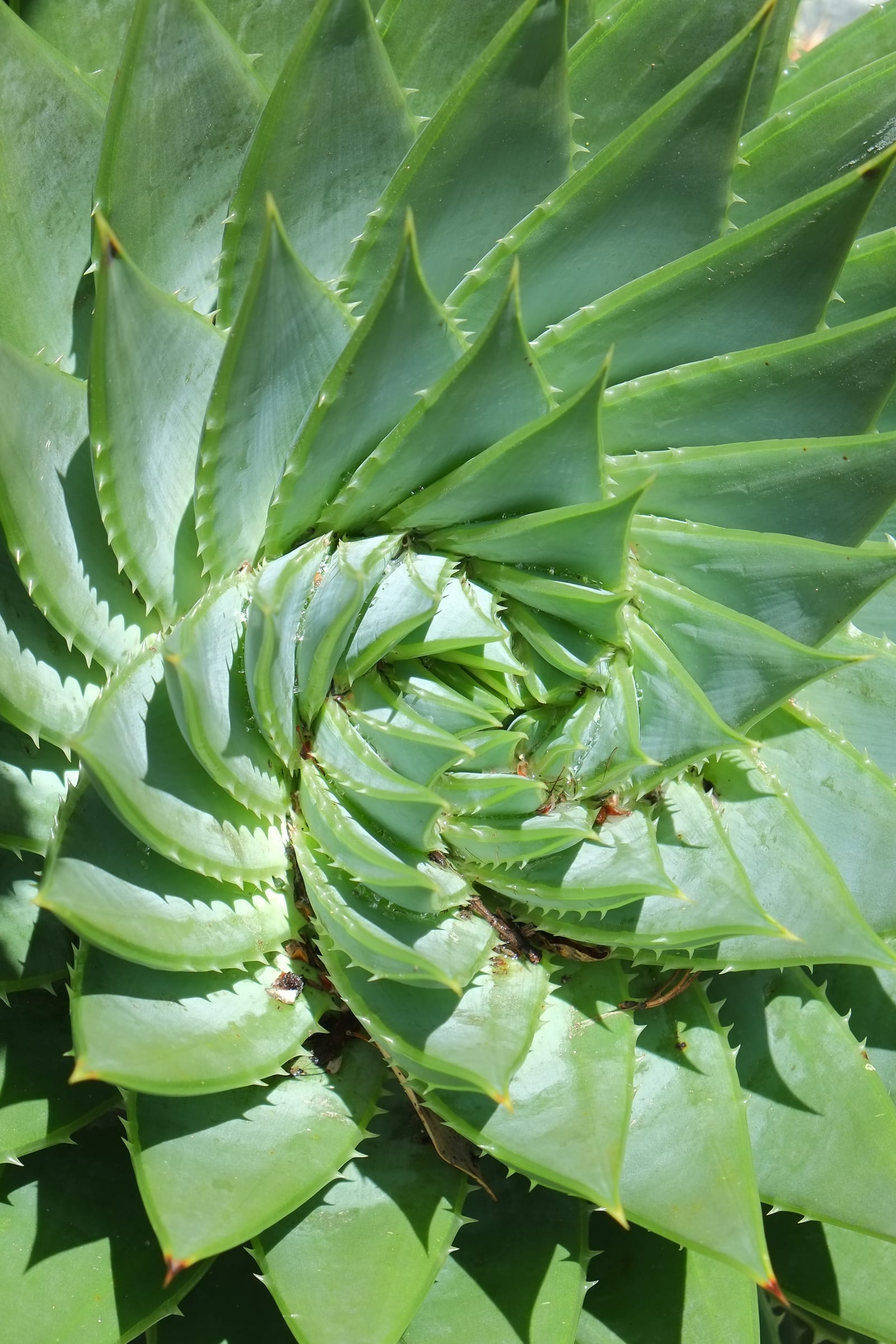
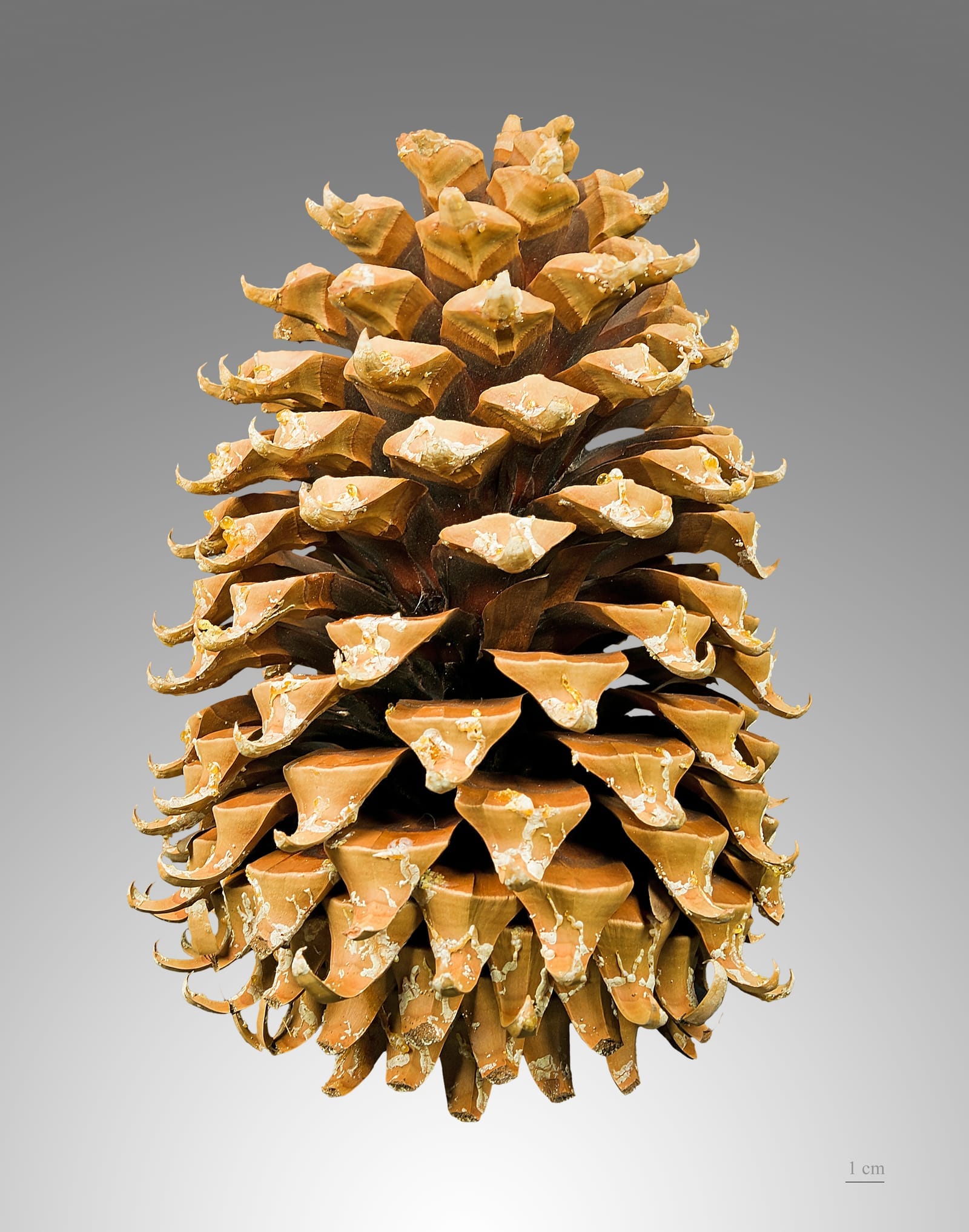
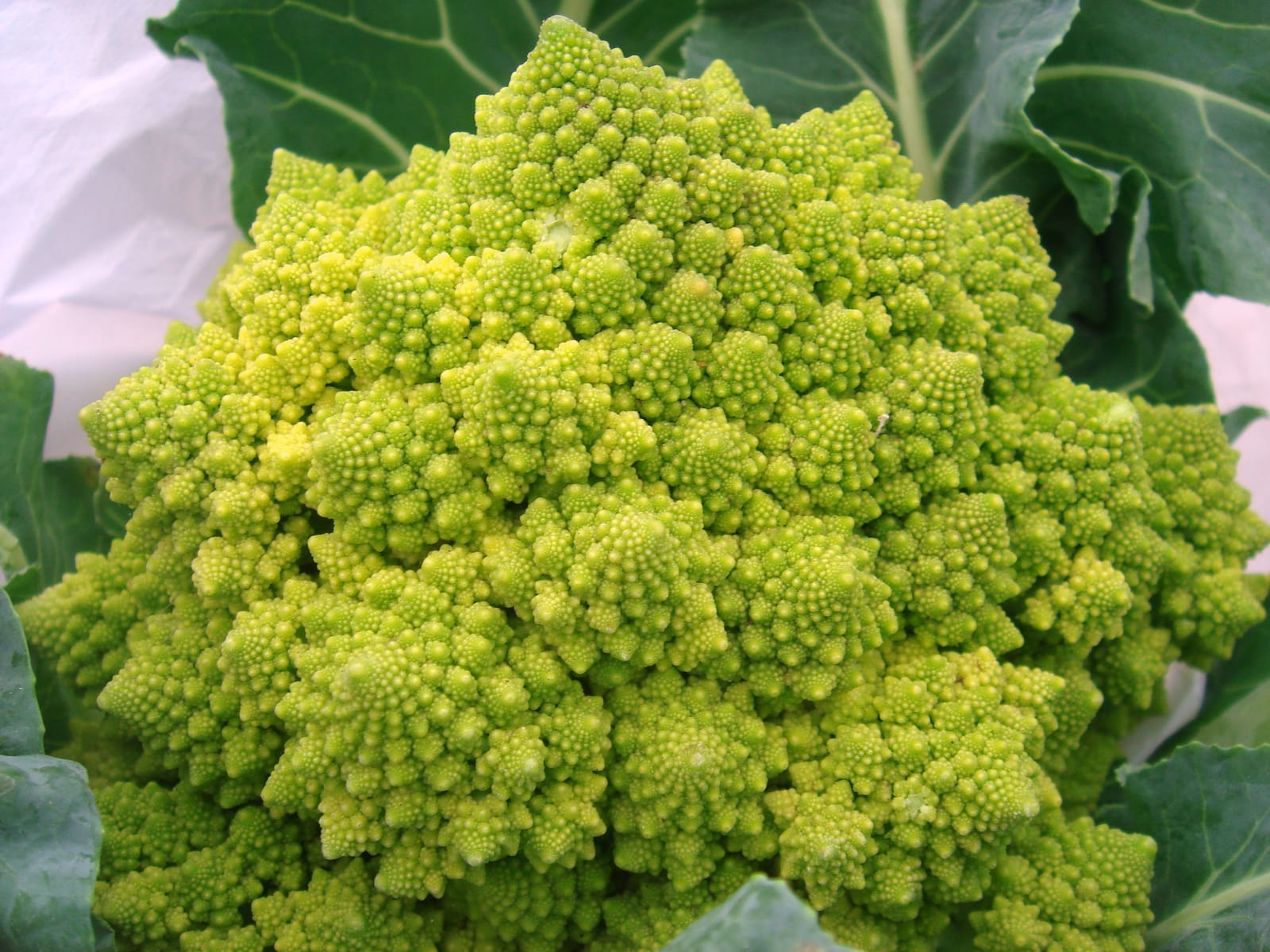
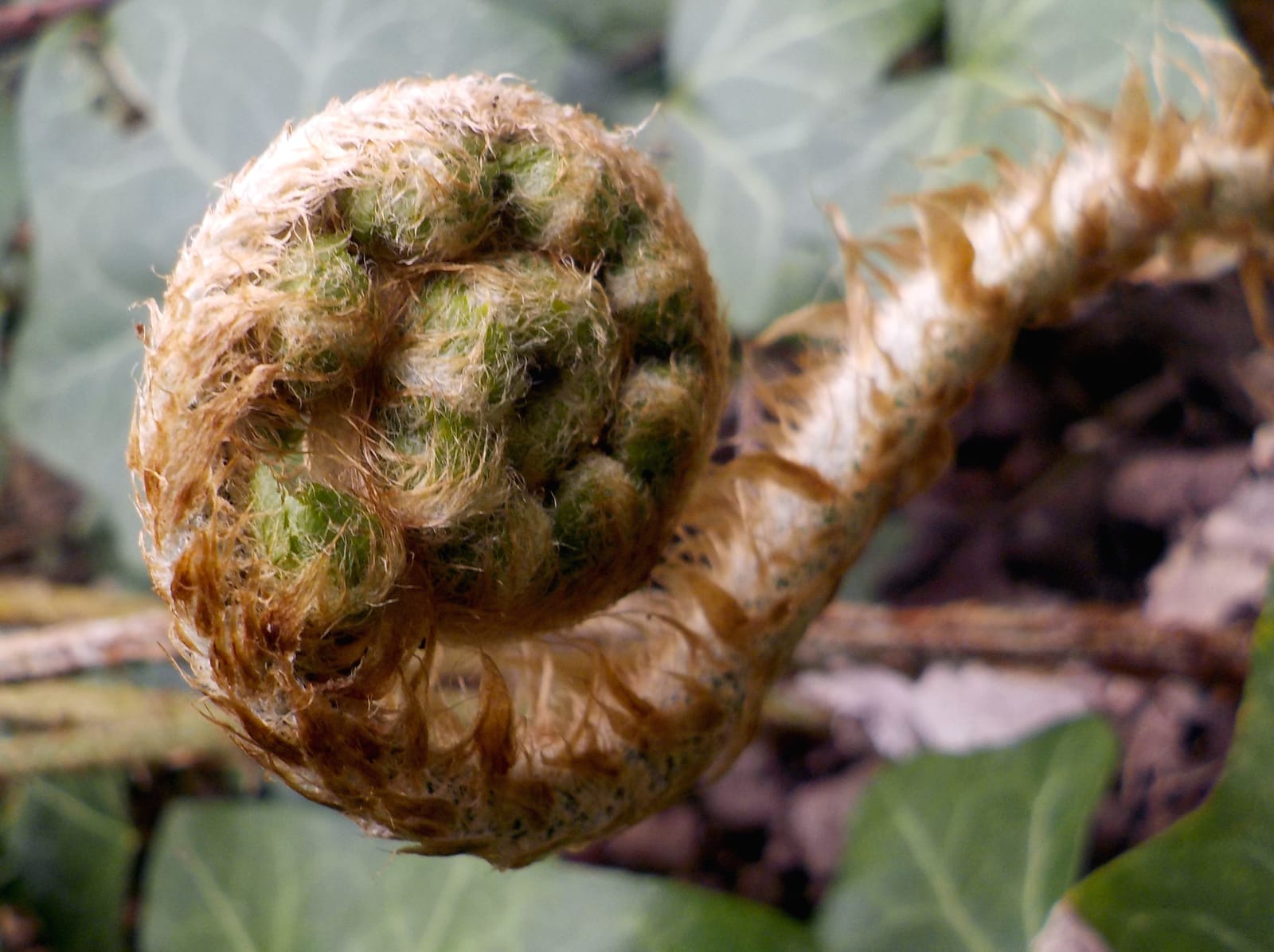
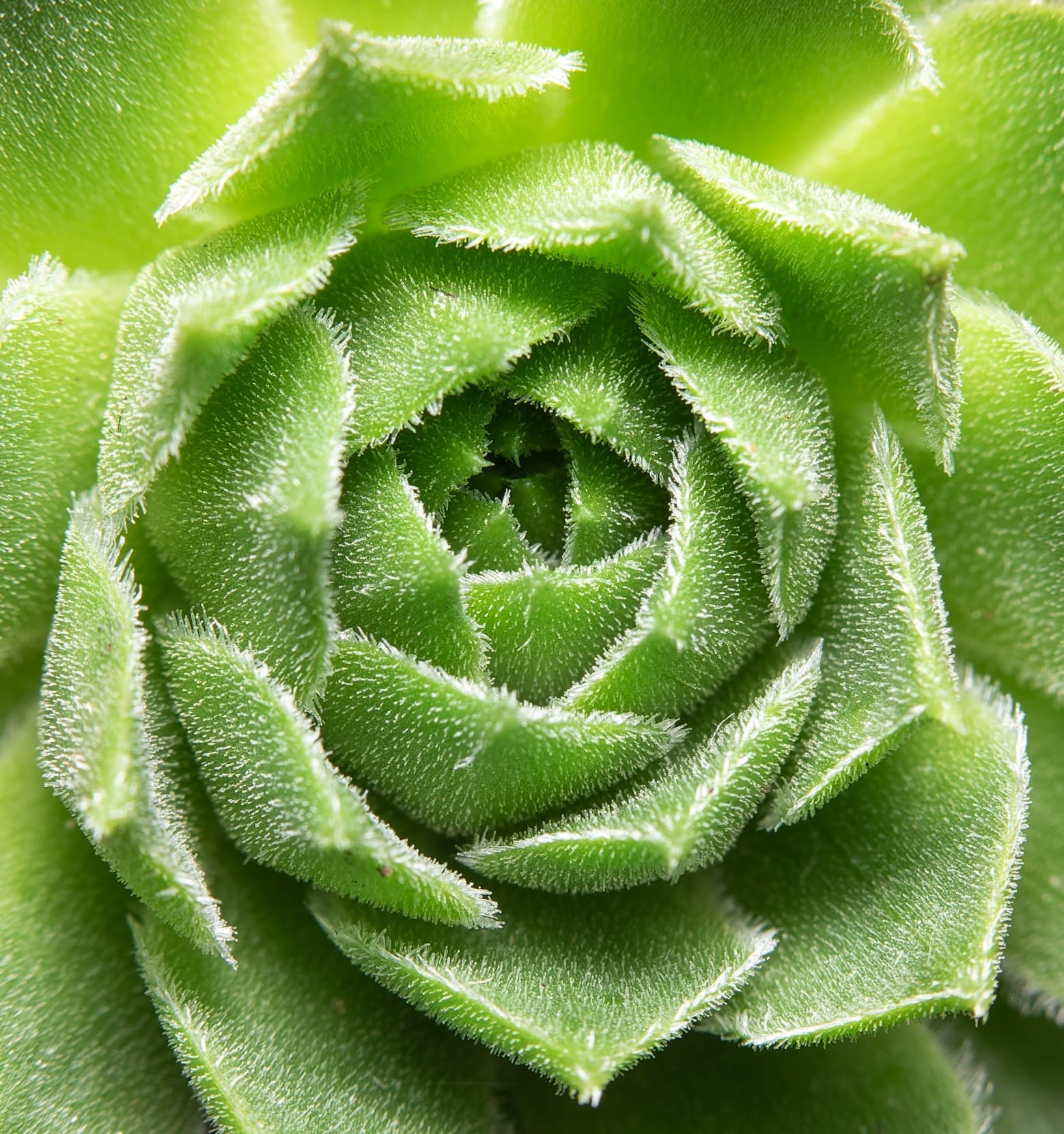

Plants pick the golden angle because it is the most efficient way to stack leaf and seed without robbing each other of light. Function leads, and the beauty comes for free.
Six things to bring up at a party
Bees have a Fibonacci family tree
A male bee hatches from an unfertilized egg and has just one parent. A female has two. Count the ancestors of a single drone back through the generations: 1, 1, 2, 3, 5, 8. Fibonacci, hidden in a family tree.
Convert miles to kilometres
Just take the next Fibonacci number. 5 miles is about 8 kilometres, 8 miles is about 13. A rule of thumb, not a law, but it works because the miles-to- kilometres factor (1.609) happens to sit right next to φ (1.618).
It hides in Pascal's triangle
Lay out Pascal's triangle and add up the shallow diagonals. The results are exactly the Fibonacci numbers. The sequence turns up in other maths too.
The band Tool wrote a song with it
In Lateralus the syllables of the first verse go 1, 1, 2, 3, 5, 8, 5, 3, and the time signatures shift between 9, 8 and 7. The track was first simply called 987: the sixteenth Fibonacci number.
Kepler called it a jewel
The astronomer Johannes Kepler said geometry holds two treasures: the theorem of Pythagoras and the golden ratio. The first, he said, was gold, the second a precious jewel.
It lives in a five-pointed star
Draw a pentagram. Every line cuts the next exactly in the golden ratio. φ is baked into the pentagon, and with it into countless five-petalled flowers.
Where the maths ends and the myth begins
The golden ratio has a shadow side: it gets dragged in everywhere it does not belong. The claim that the Parthenon was designed on the golden ratio is an idea from the nineteenth century, not from ancient Greece. There is no Greek text that mentions it. The Mona Lisa and the pyramids of Giza get pulled in after the fact too.
Lay enough rectangles over a famous work and you will always find a proportion that comes close. The spirals in a sunflower are real. The numbers are real. But much of the art and architecture myth is wishful thinking, beautifully retold. We find that distinction the most interesting part: do not believe everything, check it.
Not everything, but exactly the right thing
Why would a marketing agency name itself after a number? The MS stands for Miedema Strategy and Marketing Strategy, the 618 for 0.618, the golden ratio. And that number captures exactly how we see growth. The golden ratio is not about more. Not more channels, more tools, more noise. It is about the right proportion: just enough of the right thing, in the right place.
A sunflower does not grow extra seeds to impress anyone. It grows in the most efficient shape there is, and becomes beautiful along the way. That is exactly what good marketing does. Not doing everything, but the right thing, in the right proportion.
That is how we work for our clients too: one system instead of loose actions, built by a small senior team in Joure.
Frequently asked questions
What is the Fibonacci sequence?
The Fibonacci sequence is a row of numbers where each number is the sum of the two before it: 0, 1, 1, 2, 3, 5, 8, 13, 21, 34, 55, 89, and so on. It became known in Europe around 1202 through the mathematician Leonardo of Pisa, nicknamed Fibonacci.
What is the golden ratio?
The golden ratio is the proportion 1 to 1.618 (the number phi). Two parts are in golden proportion when the larger part relates to the whole as the smaller part relates to the larger. The ratio is often experienced as especially balanced and appears throughout nature.
How are Fibonacci and the golden ratio connected?
If you divide each number in the Fibonacci sequence by the one before it, the result creeps ever closer to 1.618, the golden ratio. The further you go, the more precisely it is approached.
Where does the name MS618 come from?
MS618 brings together two stories. The MS is the set of initials behind the agency: Miedema Strategy, and at the same time Marketing Strategy, with a nod to MediaSoep, the company that founder Jorrit Miedema built and sold earlier. The 618 comes from 0.618, the golden ratio (1 divided by 1.618). Together they capture how we see growth: the right proportion, not doing more but exactly the right thing.
Is the golden ratio really everywhere in art and architecture?
In nature the link is well supported, for example in the arrangement of seeds and leaves. But many famous claims about art and architecture, such as the Parthenon or the Mona Lisa, were only invented in the nineteenth century and do not hold up mathematically. The maths is real, part of the myth is not.
Image credits
Imagery via Wikimedia Commons. Sunflower: Rifat R (CC BY 4.0). Nautilus: Chris 73 (CC BY-SA 3.0). Succulent: Julesvernex2 (CC BY-SA 4.0). Romanesco: Leon Brocard (CC BY 2.0). Pinecone: Didier Descouens (CC BY-SA 4.0). Fern: Albarubescens (CC BY 4.0). Spiral aloe: Pseudopanax (public domain). Wave: NOAA. Hurricane: NASA. Galaxy NGC 1300: NASA, ESA and the Hubble Heritage Team. Golden rectangle and the portrait of Fibonacci: public domain.
Curious what the right proportion is for you?
Schedule a no-obligation introductory call. We look at your situation and tell you honestly what is and is not worth doing.
Schedule a callNo obligation. First conversation is free.